We Uses Cookies
This website uses cookies to enhance
your browsing experience.
Contact US
We Uses Cookies
This website uses cookies to enhance
your browsing experience.
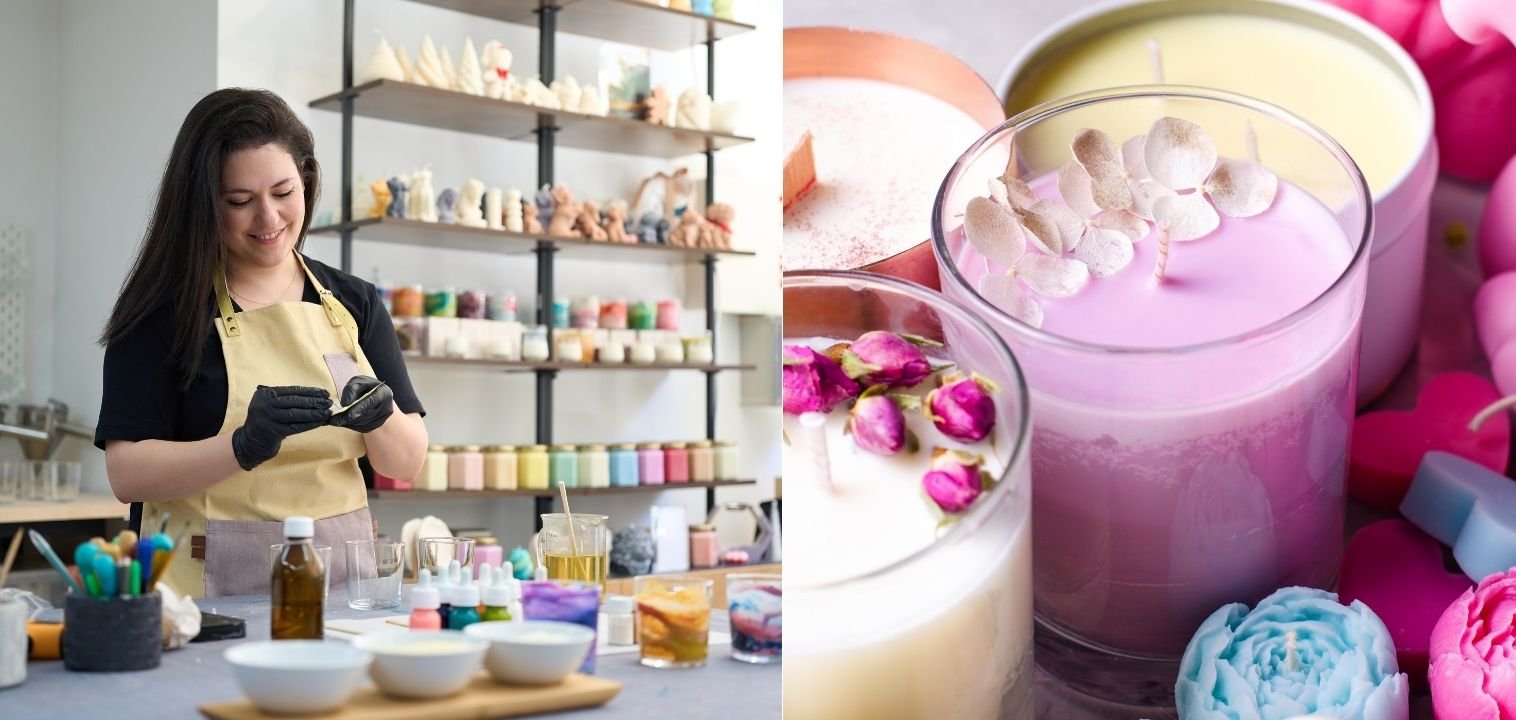
Remember when candles only came out during power cuts? Now they sit on decor shelves next to reed diffusers, cost ₹500 or more, and sell out before wedding season even peaks. Somewhere in the last few years, candles stopped being a backup and became something people actually want on their coffee table. That's part of the reason so many people in Delhi are now typing "candle-making course in Delhi" into Google instead of just watching a few videos and figuring it out themselves.
Here's the thing about figuring it out yourself, though. It usually doesn't work. Talk to enough self-taught candle makers, and you hear the same handful of complaints on repeat: wax that never quite sets, jars with weird sunken middles, and fragrance that's basically gone the second you light the wick. None of that means candle making is hard. It just means nobody explained the actual mechanics of it - how wax reacts to temperature, why wick size matters way more than people assume, and how much fragrance oil a wax can hold before it stops setting properly at all.
Craft Tree Academy has been running the candle-making training out of its center in Shalimar Bagh for a while now, part of over 12 years of teaching craft and skill-based courses. This article gets into why Delhi in particular is a good place to learn this, where beginners usually mess up, what's actually in the course, and how to start - whether you're doing this purely for fun or trying to build a real income around it.
Plenty of cities have festivals. Plenty have weddings. Delhi has a lot of both, and on top of that, a corporate gifting culture that keeps things moving year-round instead of just spiking around Diwali. A few reasons the city works in a beginner's favour:
Delhi hosts more weddings a year than almost anywhere else in India, and wedding season alone creates massive demand for personalised return gifts. Corporate offices across the NCR order festive hampers constantly, and candles have quietly turned into a default item in those boxes. Home decor and lifestyle boutiques keep popping up in places like Hauz Khas, Lajpat Nagar, Vasant Kunj - and a good number of them are actively hunting for local, small-batch suppliers rather than big manufacturers.
There's also the supply side. Wax, fragrance oil, jars, packaging - all of it is available nearby in Sadar Bazaar and Chandni Chowk, so you're not stuck waiting weeks for a restock to show up. And buyers on Instagram and Meesho within NCR tend to respond well when something is genuinely "made in Delhi" - which is an easy claim to back up when you're training and sourcing right here instead of importing everything.
One thing worth mentioning: most people only start thinking seriously about candle making once Diwali or wedding season has already begun. By then there's no time left to learn, source, and build stock. Starting a few months ahead means you walk into the busy season already knowing what you're doing.
Before students join, we hear some version of the same list almost every time. A white, frosty film sitting on top of the wax. Tunnelling, where the candle burns a hole straight down the middle and leaves wax stranded on the sides, untouched. Barely any scent once it's actually lit. Tops that sink in or crack while cooling. Wicks either too thin (weak, flickering flame) or too thick (smoking, uneven burn). Colour that fades in a few days, or comes out patchy instead of even. Candles that just won't come out of silicone or metal moulds cleanly.
Every single one of these traces back to some technical detail nobody mentioned - pouring temperature, fragrance load percentage, the right wick diameter for a given jar size. And these details change depending on the wax. Soy wax doesn't act anything like paraffin. Gel candles need a totally different approach to colour and scent. Without someone actually watching and correcting technique as you go, the same mistakes just keep happening, batch after batch.
There's a cost angle people don't budget for either. A batch of wax, fragrance, jars, and wicks isn't cheap, and a failed pour means throwing all of it out. We've had students admit they'd spent more money on failed DIY attempts before joining than the entire course cost - which tells you something about how expensive "learning through trial and error" really is.
The course takes complete beginners through everything step by step. No prior experience assumed.
By the end, the point isn't just "you made a candle." It's that you'd actually feel okay selling it.
One practical perk of training in Delhi: you're already close to the wholesale markets candle makers rely on. Sadar Bazaar and Chandni Chowk are well known among small business owners for cheap packaging, jars, and craft supplies, and wax or fragrance suppliers across NCR mean restocking is fast, not a multi-week wait. As part of the course, we hand over a vendor list so nobody has to hunt this down alone afterward.
This matters more than it sounds like it should. Buying wholesale instead of retail is often the difference between a candle business with real margins and one that barely covers its own costs.
It's a mixed room, honestly. Homemakers wanting flexible, home-based income. Students exploring a creative, low-cost career path. Working professionals after a weekend side hustle. Boutique or gift shop owners looking to add candles to what they already sell. Wedding and event planners who need customised return gifts. Hobbyists who just like working with their hands and want to get better at it.
Some people walk in never having melted wax in their life. Others have been messing around at home for months and just want someone to fix what keeps going wrong. Both groups usually land in the same place by the end - making candles that are consistent and actually sellable.
Candle making is one of the more forgiving businesses to start from home. No shop, no staff, no heavy machinery. Most students start small - a couple dozen jar candles sold to friends, family, and whoever's following them on Instagram. From there, growth tends to come through three channels: festive gifting around Diwali and Rakhi, wedding return-gift orders, and repeat buyers who come back once they've tried one candle and liked it.
It doesn't happen in a week, obviously. But Delhi's a big enough market, with steady demand across weddings, festivals, and corporate gifting, that there's real room for a small candle business to grow into something. As long as the quality stays consistent - which is really the whole point of proper training in the first place.
Craft Tree Academy has trained over 30,000 students across India over the last 12 years, across various craft and skill-based courses. For candle making specifically, a few things stand out. There's an offline centre in Shalimar Bagh for hands-on practice with real wax and tools - not just watching a screen. Live online batches run the same curriculum for anyone outside Delhi. Trainers actually have business experience, so the guidance goes past theory into what running a candle business really involves. Mistakes get caught live during demonstrations, not after an entire batch is already ruined. WhatsApp support sticks around after the course ends, not just during it. Students get vendor lists and reference material so there's no guessing where to source from. And a certificate of completion helps when it's time to market your candles or approach bulk buyers.
The goal was never just "teach someone to pour wax into a jar." It's giving someone a skill they can actually build a business around.

Both lead to the same certificate and the same skill level. It really just comes down to how you personally learn.
No. It's built for complete beginners and moves step by step from the basics.
Shalimar Bagh, Delhi, near Fortis Hospital. That's where the hands-on classes happen.
Yes. The live online batches follow the same curriculum and are open to students anywhere in India.
Jar, pillar, soy, gel, beeswax, aromatherapy, and 3D-molded or decorative candles.
Yes - pricing, packaging, branding, vendor sourcing, and selling through Instagram and online marketplaces are all covered.
Yes, a certificate of completion is provided, which helps when marketing your candles or approaching bulk buyers.
How long does the course take? Batch duration and timings get shared once you reach out, since scheduling is flexible for both online and offline students.
The difference between a candle that looks homemade and one that sells at a premium price almost always comes down to training, not talent. If you're in Delhi or anywhere else in India and want to turn this into a real skill or an actual income source, Craft Tree Academy's candle-making course gives you the hands-on training, sourcing guidance, and ongoing support to get there.
Reach out via WhatsApp or call +91-9643792145 / +91-9873504819 to check batch availability.
Our Academy is driven by a strong team of professionals and provide training required for a successful venture.

Block AA- 256-1st floor, near Fortis hospital Shalimar Bagh Delhi -110088

© 2019 Craft Tree Academy All Rights Reserve Designed & Powered By Website99