We Uses Cookies
This website uses cookies to enhance
your browsing experience.
Contact US
We Uses Cookies
This website uses cookies to enhance
your browsing experience.
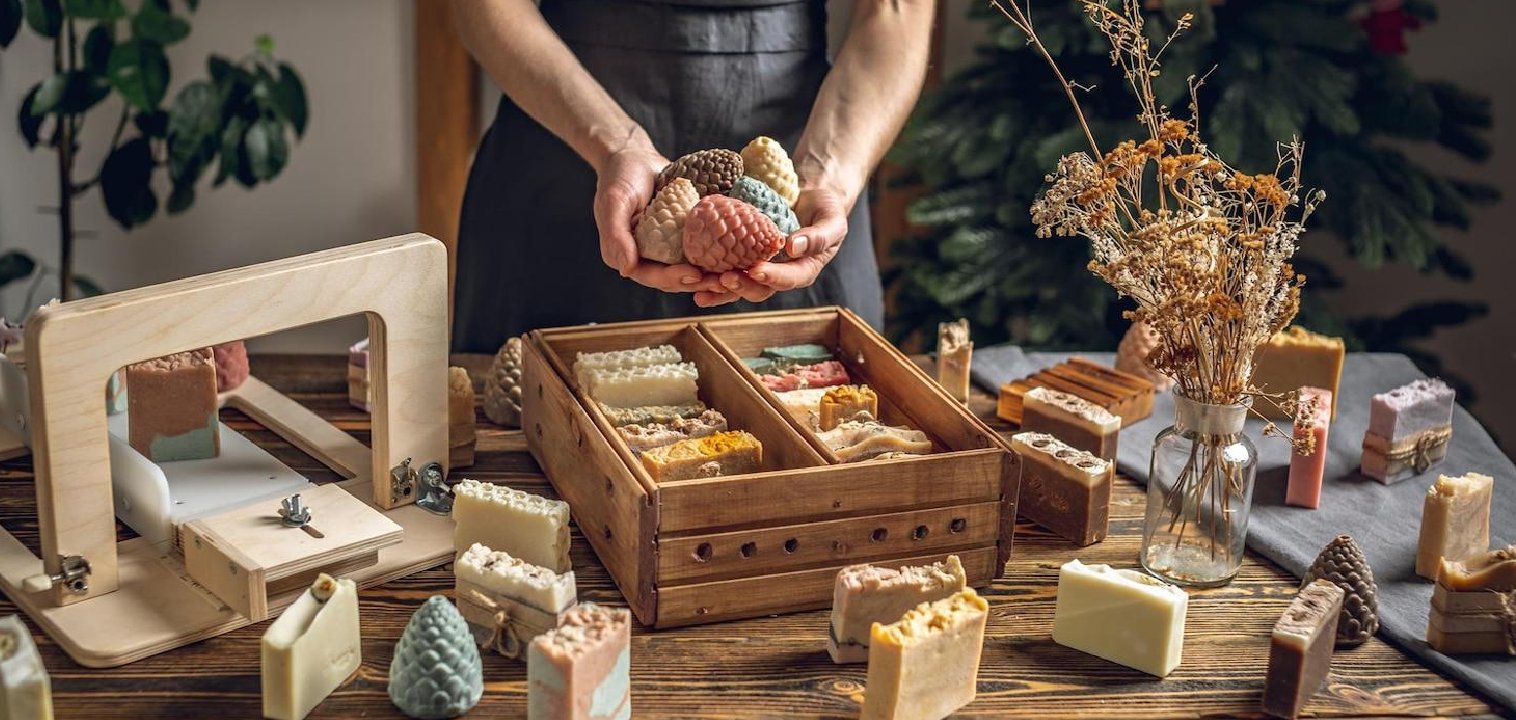
Soap making is not only a hobby but also a lucrative skill if you learn it the right way. Today, consumers are looking for chemical-free, handmade, and natural skincare products. The demand for handmade soap brands is increasing rapidly, but there is a problem. Many people begin by learning from YouTube videos, but those products are not properly formulated, safe, or business-friendly. What happens? The products don't work, there are skin reactions, or the business model is not sustainable. That's why proper training is necessary to bridge this gap.
If you are serious about turning your hobby into a money-making venture, then you need to learn soap-making professionally. At Craft Tree Academy, we teach everyone, from beginners to entrepreneurs, online and offline, so that you can start your soap brand or enhance your skills.
The handmade skincare and natural beauty movement is not a trend in India, but a change. Today's consumer actually reads labels and prefers sulphate-, paraben-, cruelty-, and skin-friendly soaps, creating opportunities for the artisanal soap maker.
Social media has given this trend added momentum, and platforms like Instagram Reels, local business pages, and online retailers such as Amazon and Etsy are providing home-based brands with a national presence. Those who used to create soap as a hobby are now running successful brands.
Market Reality
Soap making is something some people get started with out of enthusiasm, by simply following YouTube tutorials, or by experimenting. While making soap is an art form, it is also a science.
Common oversights for newcomers:
The result is soap that cracks, sweats, has a funky smell, or irritates customers' skin. What confidence builder is a couple of bad reviews for a small brand?
So if you want to learn to the point where you're successful in this field and make a decent living from it, shortcuts like DIY experiments are not going to get you there. What you need is formal learning that's structured, guided, and safe, where you get a good understanding of soap chemistry, grasp the logic of formulation, and learn how to make saleable products.
Platforms such as Craft Tree Academy, which utilise a structured approach, address this specific need by bringing together creativity, knowledge, and business acumen.
Most people assume that making soap is fun—they mix different oils, add some nice smells, pour it into a mould, and wait a few hours for it to set. But making soap professionally is a combination of science and creativity. If you are serious about your soap business and want your products sold in stores and on e-commerce platforms, you need to move beyond just enjoying the craft.
What does it mean to make soap professionally? Here are some examples:
When making soap, you don't just follow a recipe; you also learn why certain oils work well with certain hair/skin types, and why different types of fragrance can cause the soap to set faster. By learning the science of soap, you can consistently reproduce your product batches.
When you learn soap making professionally, you receive structured training in both methods of soap making, which include:
When you know how to create soap products properly, not only do they look amazing, but you also provide your customers with safe, reliable products.
Hobby-level learning can be fun and exciting, but you will not have the clarity and consistency that you would with professional-level learning.
So if you want more than just a dabbling course in soap making, then the courses at the Craft Tree Academy are for you. Join online or in person—wherever that fits into your schedule.
The emphasis is not just on "how to do it," but rather on "why and how to do it right." Training steps guide you along the way, so beginners can follow while seasoned learners can sharpen their skills.
Course Highlights
This course will take you from the basics to professional detail, clearly and methodically:
tips Each topic is backed up by exercises in such a way that you don't only learn the theory—you do apply it.
In this course, you will be working on a range of imaginative, market-ready soaps, such as:
These projects deliver hands-on experience in color balancing, layering, detailing, and flawless finishing.
Craft Tree Academy is more than just crafts; it's about clarity you can apply in the form of:
Taken together, these skills will enable you to produce professional-level output that is beautiful, sound, and ready for the market. If turning your passion into a career is your goal, structured learning is the way to achieve lasting confidence.
Both learning styles have benefits, and it ultimately comes down to what works for you based on your personal preferences, lifestyle, and geographic location. At Craft Tree Academy, both options have been designed to the same high standards of quality and structure.
Online soap-making courses offer great flexibility for individuals who want to learn at their own pace or are unable to travel to Mumbai for in-person learning.
Some of the advantages of taking an online course are:
If you enjoy learning at your own pace and prefer to create at home, then the online option may be your best choice.
If you perform better when you are in a hands-on learning environment, then you will enjoy the benefits of hands-on learning that an offline soap-making course offers.
Some of the many advantages of participating in offline courses include:
You will have opportunities to work in a professional environment during offline classes, which can build your confidence quickly.
Making soap is simple, but producing a scientifically based and marketable end product may be more difficult. Beginners often make minor mistakes that affect the quality of their completed item.
Mistakes Most Often Made by Beginners
The above errors stem from a lack of knowledge of the correct procedure.
How Professional Education Can Help You
Structured training eliminates errors in your process. You will develop a clear understanding of how to produce consistent, safe soaps, which will build your self-confidence and enhance the quality of the products you create.
If you want to avoid repeating the same errors and produce soaps that are safe, consistent, and marketable, your next step is to learn how to make soap correctly through an educational program.
If you're serious and want to avoid repeated mistakes, the best step is to learn soap making professionally—so you can confidently make safe, consistent, and market-ready soaps.
Once you complete the course, you will acquire skills, but you will also become a budding entrepreneur, as the demand for handmade products is so high in India that smaller brands will thrive and flourish online, at local markets, or through events.
Business Roadmap
For instance, starting a soap-making business requires little capital; thus, it is easy for both novice entrepreneurs and homemakers. The basics of a business, such as costing and packaging, as well as marketing, are taught at Craft Tree Academy.
When you learn soap-making professionally, turning a hobby into a lucrative income is definitely possible.
When you choose to learn soap making professionally, you will not only be able to master the art of developing all types of soaps, but you will also gain the ability to create the income and independence you desire to live the life you choose by:
With the guidance of Craft Tree Academy, you:
More importantly, instead of treating soap-making as a recreational activity, you can turn your hobby into a structured, income-generating vocation by learning to make soap professionally.
When you have decided to learn soap making professionally, you are not only learning but also growing.
Q1. Can I become a professional soap maker even if I'm a beginner?
Absolutely—Craft Tree Academy offers a curriculum specifically designed for beginners.
Q2. Will I receive a certificate after completing the course?
Yes—a government-certified certificate is awarded, which increases your credibility.
Q3. How long does it take to complete the course?
Courses typically last 2–9 days (depending on the level).
Q4. Can I start my own soap business after the course?
Yes! The courses are designed to help you easily transition from a hobby to a business.
Q5. Will online courses provide practical experience?
Yes—live guidance, demos, and practice opportunities are available to help you create real products.
Soap making is not just a hobby; it's a real opportunity, and you can make this a strong career with the right instruction and training. When you understand the step-by-step instructions for making this, you're no longer guessing; you can make it with confidence. The reason Craft Tree Academy offers such instruction is to take you through the science of soap, the safety of making this, the formulas, and the basics of running a business.
Soap making has evolved from a simple hobby into a profitable skill, driven by rising consumer demand for chemical-free, handmade, and natural skincare products. With the popularity of artisanal soap brands, many aspiring soap makers often start by following unverified online tutorials, which can lead to poorly formulated and unsafe products. As a result, proper, professional training is crucial for success in this field.
Craft Tree Academy provides structured education for beginners and aspiring entrepreneurs, focusing on business aspects and the science behind soap-making. The curriculum covers essential topics such as formulation accuracy, safety standards, and packaging practices, ensuring students can create consistent, market-ready products.
In India, the handmade skincare movement is gaining traction, driven by consumers who prefer sulphate -free, cruelty-free products, thus creating opportunities for new artisans. However, beginners face challenges such as incorrect ingredient ratios, failure to account for preservation needs, and a lack of knowledge about ingredient skin compatibility.
Professional soap making goes beyond mere creativity; it involves understanding the chemistry of ingredients to create effective formulations. Education includes various methods such as cold process and melt & pour techniques, troubleshooting formulations, and branding essentials. The course at Craft Tree Academy culminates in practical projects, such as creating multi-colored and designer soaps, enabling students to produce visually stunning, safe products. In sum, pursuing professional learning equips aspiring soap makers with the skills needed to succeed in an increasingly competitive market.
If you are serious and want to convert your passion into a profession, then now is the time to Learn Soap Making Professionally. Enroll now, and start your journey of creativity confidently.
Our Academy is driven by a strong team of professionals and provide training required for a successful venture.

Block AA- 256-1st floor, near Fortis hospital Shalimar Bagh Delhi -110088

© 2019 Craft Tree Academy All Rights Reserve Designed & Powered By Website99